Refraction is the physical phenomenon by which light changes direction as it passes from one medium to another; this is how a lens, through its shape and power, can bend the rays of light coming from the outside world and focus them at a point on the retina.
We use the word «refraction» for the eye's prescription, or the measurement of its optical state, which results from the relationship between the focusing power of the cornea and crystalline lens and the distance separating them from the retina.
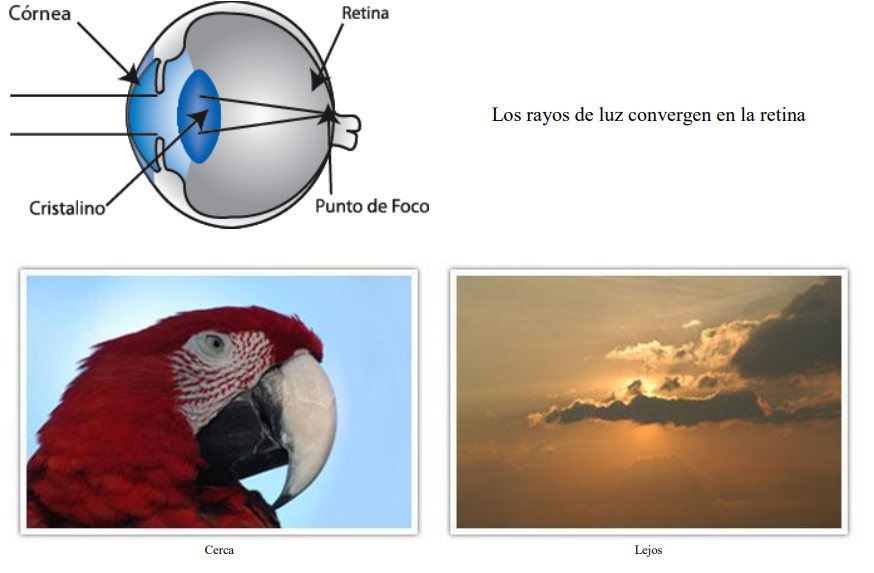
An emmetropic eye is the optically ideal eye, in which the focal point falls on the retina; an ametropic eye, by contrast, is out of focus. In wavefront technology, «defocus» is the term for the lower-order optical aberration produced by myopia and hyperopia.
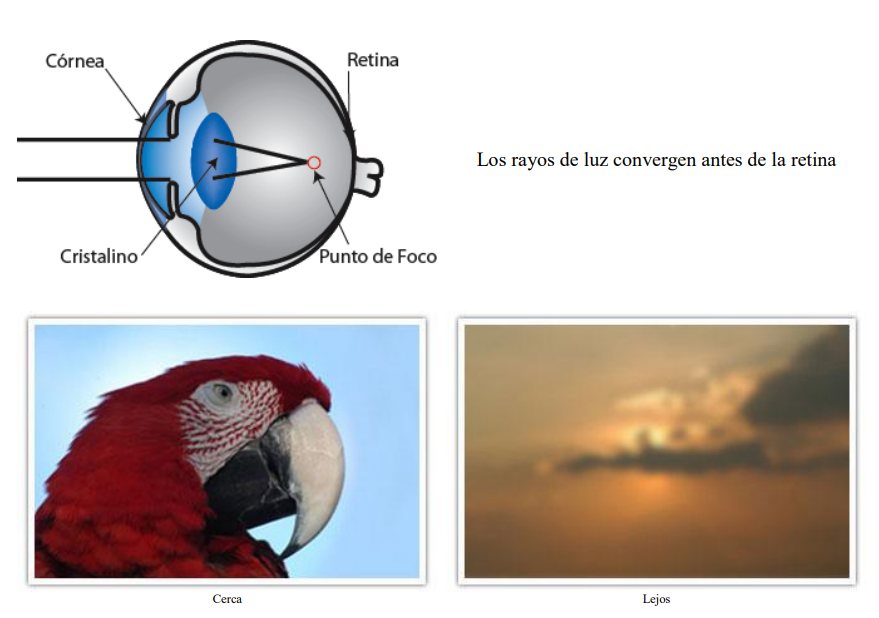
Myopia
Myopia, or short-sightedness, is a common defect. The eye has too much focusing power, so light comes to a focus in front of the retina instead of reaching it. Short-sighted people see well close up, but distant objects look blurred and can sometimes be unrecognisable.
It can be hereditary, begins in childhood and progresses into adult life. In myopia the distance between the lenses and the retina is usually too great — the eye is too long — although in some cases it is caused by excess power in the cornea or the crystalline lens.
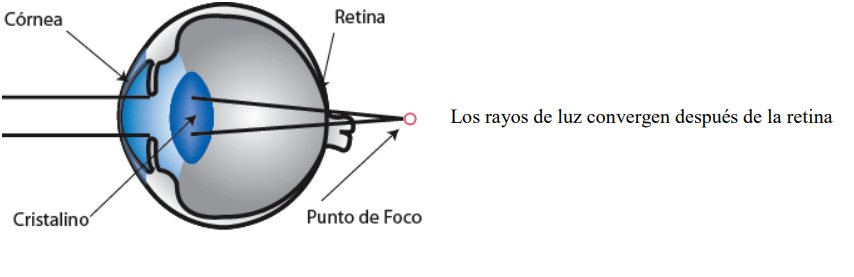
Hyperopia
We are all long-sighted at birth, but the eye reaches its normal size at around three years of age. Long-sighted people see distant objects well but have to strain to see things close up.
In hyperopia the eye is smaller than average, so the distance between the lenses and the retina is too short; the cornea is often flatter or less powerful as well. The eye lacks focusing power and light comes to a focus behind the retina. It can be hereditary and is a frequent cause of squint in children who go untreated.
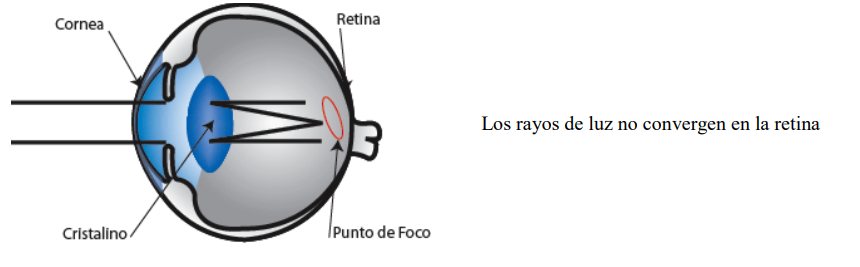
Astigmatism
This is a relatively common defect. In an astigmatic eye light is never focused to a single point, which distorts the image. The main cause is the shape of the cornea, though the crystalline lens can also be responsible. In astigmatism the cornea is oval rather than round, so light rays are refracted unevenly.
At the ICOA ophthalmology clinic, automated refraction and glaucoma tonometry are free of charge. If your vision is blurred at distance or near, book an appointment and we will carry out a full refraction.